
Etsy fees and payouts can feel like a fog machine. The goal is to make your numbers boring.
When your finances are predictable and clear, you can actually focus on what matters: making great products and serving your customers.
What to track (and nothing more)
Keep it simple. Track these five things and you'll have clarity on your shop's real profitability:
Gross sales: The total before Etsy takes their cut
Etsy fees: Transaction fees, payment processing, listing fees
Shipping costs: What you actually paid to ship
Materials: Supplies, packaging, raw materials
Profit: What's left after all the above
Don't try to track every single transaction in real-time. A weekly review is enough to stay on top of things without burning out.
Understanding Etsy's fee structure
Etsy takes a cut at multiple points:
Listing fee: $0.20 per listing (renews every 4 months or when sold)
Transaction fee: 6.5% of the total sale price (including shipping)
Payment processing: 3% + $0.25 per transaction
Offsite ads (if applicable): 12-15% of sale if Etsy drives the traffic
These fees add up. On a $20 item, you might pay $2-3 in fees. Knowing this upfront helps you price correctly.
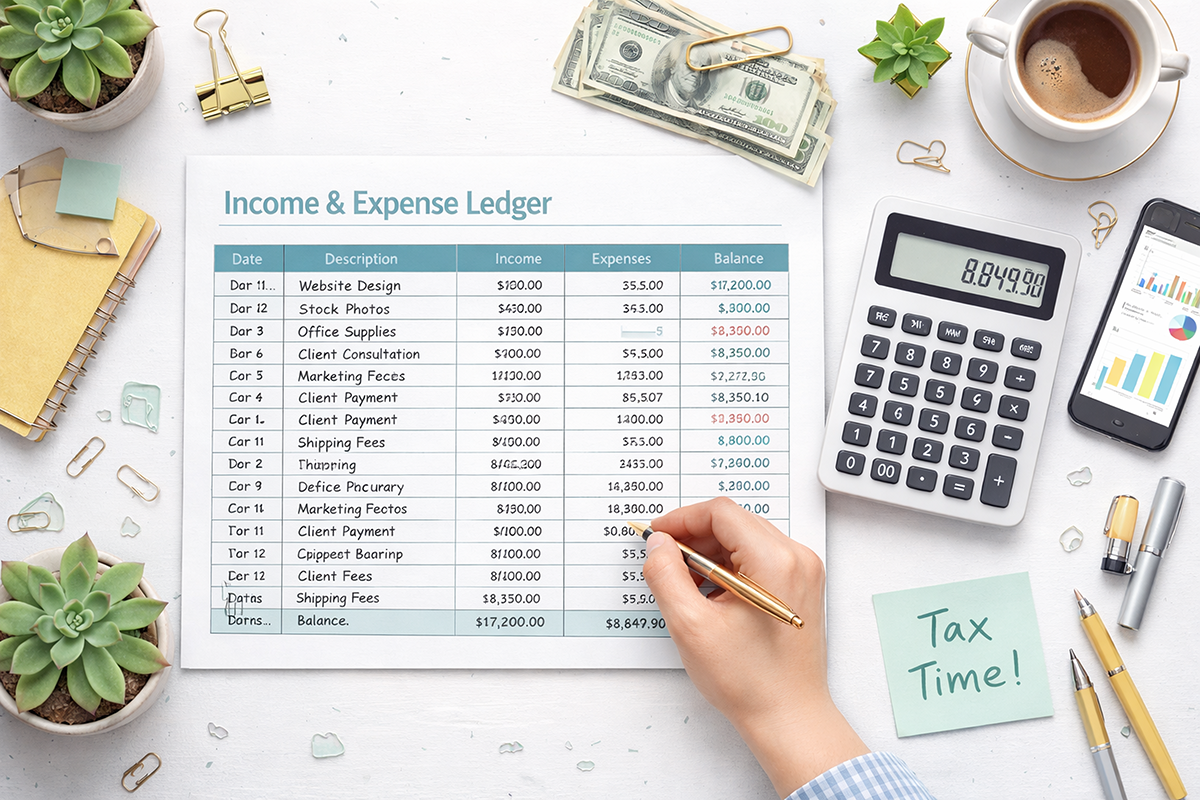
A simple ledger keeps you sane
A simple ledger format keeps you out of analysis paralysis and gives you clean totals for tax time.
At the end of each month, you should be able to answer these questions:
How much did I sell?
How much did I spend on materials and shipping?
How much did Etsy take in fees?
What was my actual profit?
If you can answer those four questions, you're ahead of 90% of Etsy sellers.