Most small businesses don’t fail because they chose the wrong accounting software. They fail because they never built a repeatable bookkeeping habit in the first place.
At the early stages of a business, whether you’re running an online shop, freelancing, or managing a side hustle, the goal isn’t perfect accounting. The goal is clarity, consistency, and control.
That starts with a system simple enough that you’ll actually use it.
The costly mistake most business owners make
One of the most common patterns is this: bookkeeping gets ignored until tax season arrives. By that point, receipts are missing, transactions are half-remembered, and bank statements don’t line up. Stress spikes unnecessarily.
This isn’t a discipline problem, it’s a system problem. When record-keeping feels complicated or time-consuming, it gets pushed aside. The fix is not more software, it’s a lighter, more usable process.
Start with one non‑negotiable habit
The most effective bookkeeping systems all share one thing in common: regularity. A single weekly check-in beats a perfect system used once a year. Your baseline habit should be: record income and expenses once per week. That’s it.
Keep your categories boring
Over-categorising is one of the fastest ways to abandon bookkeeping. You don’t need dozens of expense types. You need categories that make sense at a glance and stay consistent month to month.
- Sales / Revenue
- Materials / Inventory
- Shipping
- Software & Subscriptions
- Marketing
- Other Expenses
Simple categories give you usable totals without analysis paralysis. You can always refine later, once the habit exists.
The 15‑minute weekly admin reset
Set a recurring calendar reminder, same day, same time each week.
- Open your ledger or tracking system
- Record all income from the past week
- Record all expenses
- Photograph or file paper receipts
- Note any unpaid invoices or expected payments
That’s less time than an average TV episode. But it saves hours of stress later and turns bookkeeping from a looming problem into a background process.
Why physical or printable systems still work
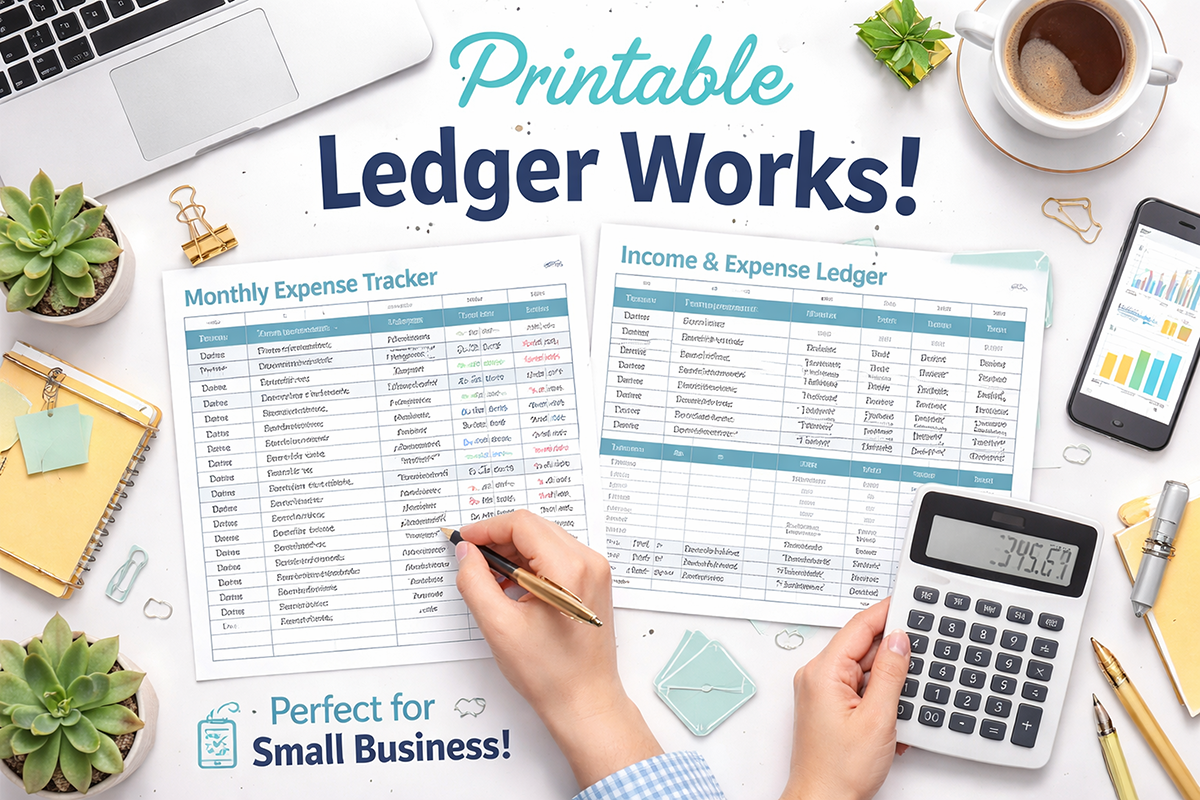
Despite the rise of apps and automation, many business owners prefer printable or structured ledgers, and for good reason. Physical systems reduce friction: the columns are already defined, the categories chosen, and there’s nothing to set up. You simply fill in the blanks.
Writing numbers down forces a moment of awareness. You notice trends, spot unnecessary spending, and stay connected to your business finances instead of outsourcing understanding to software.
When a printable ledger makes sense
A printable or fillable ledger is ideal if you want a low-cost alternative to subscriptions, prefer a visual overview, need accountant-friendly records, or want something you can start using immediately.
These tools work best when paired with a weekly routine, not as a replacement for discipline, but as a support for it.
Build the habit first, optimise later
Sophisticated tools have their place. But clarity always comes before complexity. If you can: track income and expenses weekly, keep categories consistent, and maintain one clear source of truth — you are already ahead of most small businesses.